Car Scratch Removal Curepipe: What Works?
- hello62666
- 3 hours ago
- 5 min read
A scratch can change the way you see your car in seconds. You notice it when you walk up to the driver’s door, catch it in direct sunlight or see it reflected under car park lights. When people search for “car scratch removal Curepipe”, they are usually looking for more than a quick cover-up. They want their paintwork to look clean, glossy and properly cared for again.
The right repair depends on how deep the scratch is, where it sits and the condition of the surrounding paint. Some marks respond beautifully to professional machine polishing. Others have cut through the clear coat and need refinishing work to look right. Knowing the difference prevents wasted money, unnecessary damage and disappointing results.
Not Every Scratch Needs Paint Repair
Modern vehicle paint is built in layers. The clear coat is the glossy protective top layer, sitting over the colour coat and primer. A light mark that only affects the clear coat can often be corrected without adding paint. This is where professional paint correction delivers its most satisfying transformation.
Common examples include fine wash marks, light scuffs from a bag brushing against the door, faint scratches around handles and surface marring caused by poor washing techniques. These imperfections may look severe when the paint is dusty or wet, but they often sit close to the surface.
A deeper scratch is different. If you can feel it clearly with a fingernail, see a white or grey line beneath the paint colour, or spot exposed metal, polishing alone will not remove it. In these cases, attempting to aggressively buff the area can thin the surrounding clear coat without fixing the damage. A quality detailer will assess the paint honestly and recommend the safest option.
Car Scratch Removal Curepipe Drivers Can Rely On
Professional scratch removal starts with inspection, not a bottle of polish. The vehicle is washed and decontaminated so dirt, traffic film and embedded particles do not hide the true condition of the paint. Under focused lighting, the scratch can then be assessed for depth, length and location.
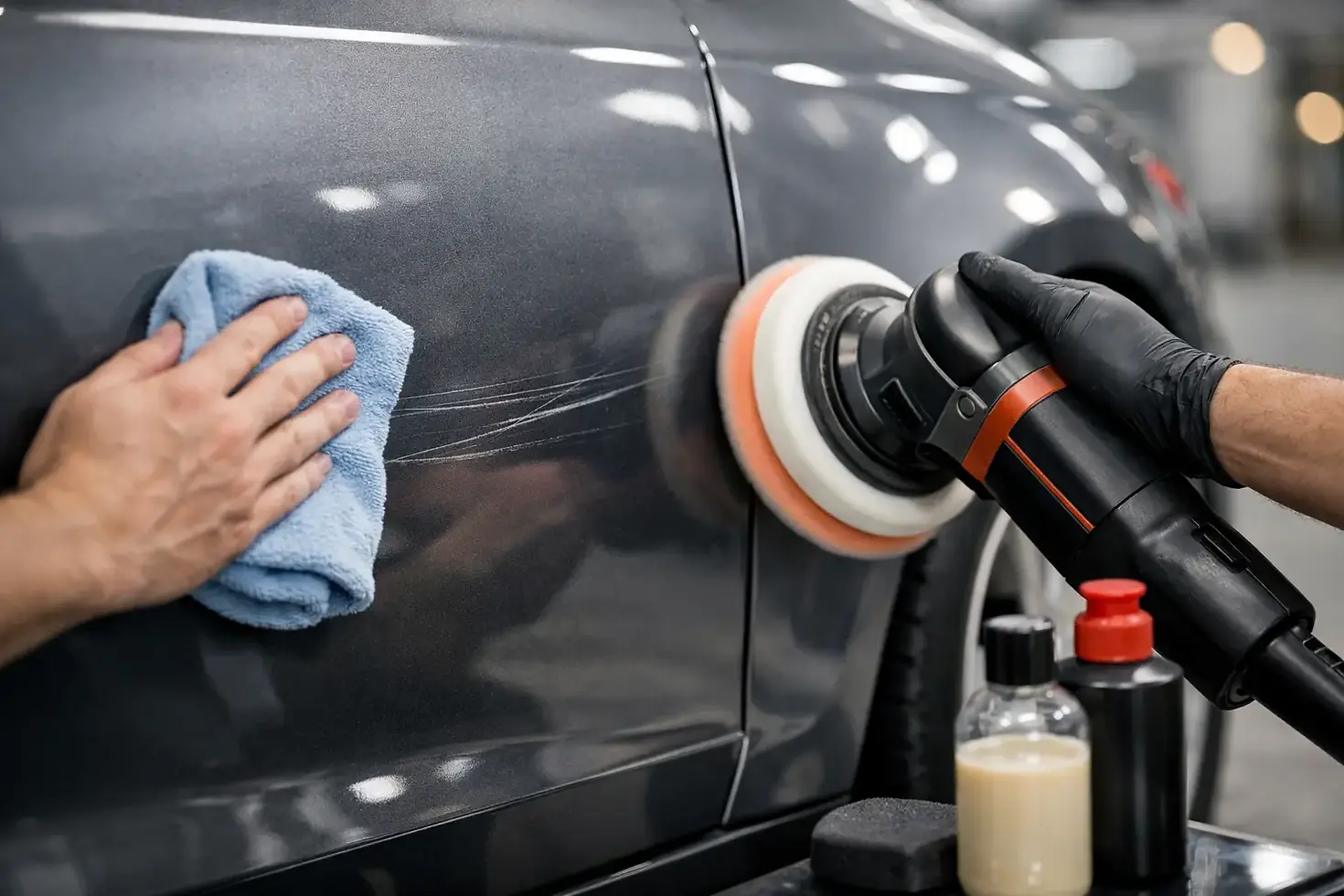
For superficial defects, a controlled machine polish may level the surrounding clear coat just enough to reduce or remove the visible mark. This process requires the right pad, compound, machine movement and pressure. The aim is always correction with restraint - improving clarity and gloss while preserving as much healthy paint as possible.
It is also worth managing expectations. Paint correction can make a scratch virtually disappear, particularly on well-maintained paintwork. On a deep scratch, the best result may be a significant reduction in visibility rather than total removal. That is still a worthwhile outcome when it restores the overall look of the panel without unnecessary repainting.
Light Scuffs and Paint Transfer
Not every visible mark is a scratch. A scrape against a painted wall, shopping trolley or another vehicle can leave paint transfer on top of your clear coat. It may look alarming, but it can often be removed through careful cleaning, clay treatment and polishing.
This is why a proper assessment matters. Treating paint transfer as a deep scratch can lead to needless touch-up paint or more aggressive correction than the panel requires.
Clear-Coat Scratches
Clear-coat scratches are the ideal candidates for professional polishing. They often show up as swirl marks, cobwebbing in sunlight or isolated straight lines. Correcting them improves the sharpness of reflections and brings back the rich, even gloss that makes a car look freshly detailed.
The outcome depends on the paint type and its thickness. Some factory clear coats are harder, while others correct quickly but require a gentler approach. A detailer who measures and inspects before polishing protects the finish rather than chasing an unrealistic result.
Deep Scratches and Chips
If the scratch reaches the colour coat, primer or bare metal, it needs a different plan. A touch-up repair may reduce the appearance of a narrow stone chip or key mark, while larger damage may require a body repair specialist and repainting.
Leaving exposed metal untreated is not a good idea. Moisture can reach the panel and create corrosion beneath the surrounding paint. Even if a full repair is scheduled later, protecting the affected area promptly is sensible.
Why DIY Scratch Removal Can Go Wrong
Many scratch-removal products promise an easy fix, but the product is only one part of the process. Harsh compounds, cheap applicators and repeated rubbing can leave haze, dull patches or uneven gloss. Household abrasives, rough cloths and untested solvents can create more damage than the original mark.
Touch-up paint can be useful for small chips, but it rarely produces an invisible repair without preparation, colour matching, levelling and finishing. Applied too heavily, it can leave a raised blob that catches the eye from every angle. On a newer or premium vehicle, a poor DIY attempt can also make a later professional repair more difficult.
There is a place for simple at-home care. Using a clean microfibre towel, proper car shampoo and a dedicated bug or tar remover can safely deal with light contamination. But if the mark remains after a gentle wash, stop before escalating to abrasive products. A professional inspection is usually the more cost-effective decision.
The Best Result Includes Protection
Removing a scratch is only half the job. Once paintwork has been corrected, it needs protection from the wear that caused the problem in the first place. The right choice depends on how the car is used, where it is parked and the level of finish you want to maintain.
A quality sealant can add gloss and short-term protection for owners who enjoy regular maintenance. Ceramic coating offers a more durable protective layer, helping the vehicle stay cleaner and making routine washing easier. It does not make paint scratch-proof, but it can reduce the impact of environmental contamination and preserve a freshly corrected finish.
For high-impact areas such as the front bumper, bonnet edge, door cups, side mirrors and lower doors, paint protection film is often the stronger option. PPF is designed to absorb the punishment from stone chips, road debris and light scuffs that polishing cannot prevent. It is particularly valuable for daily drivers and vehicles that spend plenty of time on the road.
Younique Detailing Co Ltd can assess the finish as a whole, rather than treating one scratch in isolation. That means considering whether a targeted correction, a full enhancement polish, ceramic coating or PPF will give your vehicle the best long-term result.
How to Keep New Scratches Away
Most paint defects are caused during washing and drying, not while driving. A dirty sponge, an automatic wash with harsh brushes or wiping dust from a dry panel can leave fine scratches across the clear coat. These marks build gradually until the paint loses its crisp reflection.
Use clean, quality wash media and separate tools for wheels and paintwork. Rinse loose dirt before touching the panel, use plenty of lubrication from proper car shampoo, and dry with a fresh microfibre drying towel. Avoid leaning bags, keys or other hard objects against the paint, especially around door edges and the boot.
Parking habits also make a difference. Choosing an end space, leaving room away from trolleys and opening doors carefully near walls can prevent the frustrating little knocks that spoil an otherwise immaculate finish. These details may seem minor, but they protect the work that goes into keeping a car looking its best.
When to Book an Assessment
Book an assessment if a scratch is visible from normal standing distance, catches your fingernail, has exposed a lighter layer beneath the paint, or has appeared on a panel you want protected. It is especially worthwhile before selling a vehicle, after a minor scrape or when swirl marks have dulled the entire exterior.
A professional can tell you what can be corrected, what should be repaired and what protection makes sense afterwards. Your car deserves more than a temporary disguise. With careful inspection and precise workmanship, the right treatment can restore the confidence you feel every time you see it shining in the driveway.


Comments