
How to Fix Faded Car Paint in Mauritius Properly
- hello62666
- 5 days ago
- 6 min read
Mauritius sunshine is brilliant for a weekend drive, but it is unforgiving on neglected paintwork. Strong UV exposure, heat, coastal air and frequent quick washes can leave a once-glossy bonnet looking flat, chalky or uneven. Knowing how to fix faded car paint in Mauritius starts with identifying whether the problem is surface oxidation, scratches and contamination, or a clear coat that has already failed.
The right repair can bring back deep colour and sharp reflections. The wrong one can thin the paint, create swirl marks or hide a more serious issue for only a few weeks. A careful approach protects both the finish you see today and your vehicle’s long-term value.
Why car paint fades so quickly in Mauritius
Modern vehicle paint is usually made up of a coloured base coat protected by a clear coat. That clear coat gives the vehicle its gloss and acts as its first line of defence against UV rays, bird droppings, tree sap, road grime and pollution. Over time, sunlight breaks down this protective layer. The surface loses clarity, colour looks washed out, and the paint can feel rough rather than slick.
Dark colours, especially black, red and deep blue, tend to show the damage sooner. Vehicles parked outside every day are also at greater risk, particularly where there is little shade. Salt in the air around coastal areas can add to the problem when it settles on the paint and is not washed away safely.
Not all dull paint is permanently damaged, though. Often, the colour is still healthy underneath a layer of oxidation, embedded contaminants and fine scratches. This is where professional correction can make a dramatic difference.
How to fix faded car paint in Mauritius: first assess the damage
Before reaching for polish, inspect the vehicle in direct sunlight and in softer light. Look at the bonnet, roof and boot lid first, as these horizontal panels receive the most sun exposure.
If the paint looks dull but still feels smooth after washing, it may simply need a light polish and protection. If it feels gritty, it likely has bonded contamination that must be removed before polishing. Fine circular scratches, often caused by rough wash mitts or dirty cloths, can make a glossy surface appear faded even when the paint itself is sound.
Clear coat failure is different. You may notice cloudy white patches, peeling edges, cracking, or areas where the surface has a dry, flaky appearance. Once the clear coat is failing, polishing will not repair it. In fact, aggressive polishing can worsen the appearance by removing more of the remaining clear coat. Those panels generally need repainting by a qualified paint professional before they can be properly protected.
A simple test is to gently wipe a small clean section with a quality paint cleaner or polish. If the gloss improves noticeably, there is usually a good chance that correction will help. If the panel remains cloudy, patchy or visibly peeling, do not keep rubbing it harder.
Start with a safe wash, not a harsh shortcut
Many paint finishes are made worse by the attempt to revive them. Household detergents, abrasive sponges and cheap silicone-heavy products can strip protection, mark the clear coat and leave a temporary greasy shine that disappears after the next wash.
Begin with a pH-neutral car shampoo, clean water and a soft microfibre wash mitt. Rinse the vehicle thoroughly first to remove loose dust and grit. Work from the roof down, rinsing the mitt regularly, and use separate tools for wheels and lower body panels. Dry with a clean, plush microfibre drying towel rather than letting mineral-rich water dry in the sun.
This step sounds basic, but it matters. Polishing a dirty surface drags contamination across the paint and adds scratches that reduce gloss. A proper wash reveals the true condition of the paintwork and gives you a safer starting point.
Decontaminate before polishing
A vehicle can look clean yet still hold iron particles, tar spots, overspray and mineral deposits that bond to the clear coat. These contaminants dull reflections and prevent wax, sealant or ceramic coating from bonding properly.
A clay treatment or synthetic clay mitt can remove much of this embedded contamination when used with suitable lubrication. It should glide gently across the paint, never scrubbed over a dry panel. Tar removers and iron fallout removers may also be needed for stubborn deposits, depending on the vehicle’s condition.
There is a trade-off here. Clay treatments leave the paint exceptionally smooth, but they can introduce slight marring on softer paint. That is normal and is one reason paint correction should follow decontamination where a refined finish is the goal.
Restore gloss with paint correction
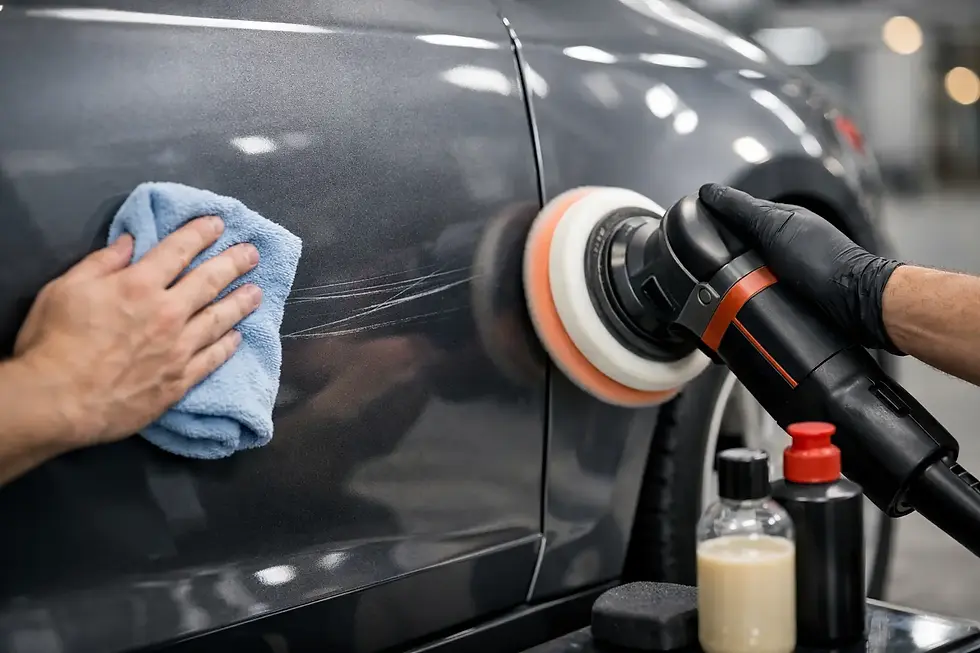
Paint correction is the process of carefully levelling microscopic defects in the clear coat to improve gloss, colour depth and reflection. It is not simply putting shine on top. When performed correctly, it removes or reduces the haze, oxidation, light scratches and swirl marks that make paint appear tired.
For mild fading, a single-stage polish may be enough. This uses a fine polish and suitable machine pad to restore clarity while preserving as much clear coat as possible. Moderate defects may require a two-stage correction: a more corrective compound to address deeper swirls and oxidation, followed by a finishing polish to refine the surface.
The aim is not to remove every mark at all costs. Clear coat is finite. A detailer should measure paint where appropriate, inspect the panels closely and choose the least aggressive method that achieves a strong visual improvement. On older vehicles, imported vehicles with unknown paint history, or panels that have been repainted, that judgement is especially important.
Hand polishing can improve very light dullness in a small area, but it is rarely the best solution for widespread fading. Uneven pressure and unsuitable products can lead to inconsistent results. Machine polishing in trained hands delivers more controlled correction and a more even finish across the vehicle.
Protect the restored paint from the next round of sun
Correcting faded paint without adding protection is like washing your car before driving through a dusty road. The improvement is real, but it will not last as it should.
For regular drivers, a quality paint sealant provides durable gloss and water behaviour with sensible maintenance. Wax can add warmth and depth, particularly on darker colours, but generally needs more frequent reapplication. Ceramic coating offers stronger chemical resistance, pronounced gloss and easier ongoing cleaning when the paint has been properly prepared. It is a premium protection option, not a substitute for safe washing or covered parking.
Paint protection film is worth considering for high-impact areas such as the front bumper, bonnet edge, mirrors and door cups. It is designed mainly for physical damage from stone chips and road debris, while ceramic coating focuses on surface protection and easier maintenance. The best choice depends on how the vehicle is used, where it is parked and the level of preservation you want.
Keep the finish looking fresh
Once the colour has been restored, maintenance determines how long it stays that way. Wash regularly with pH-neutral products, avoid automatic brushes where possible, and never use a dirty rag to wipe dust from a dry panel. Dust may look harmless, but it contains fine abrasive particles.
Park under cover or in shade when practical. If the vehicle must stay outdoors, a quality fitted car cover can reduce UV exposure, provided the paint is clean before fitting it. Remove bird droppings, tree sap and fuel spills promptly, as heat can bake contaminants into the clear coat.
A periodic detailing service also helps catch minor issues before they become expensive repairs. Light polishing and topping up protection at the right time is far more conservative than waiting until oxidation is severe or the clear coat begins to fail.
When professional help is the smarter option
DIY products can be suitable for a well-maintained car with mild dullness. However, professional assessment is the safer choice when the fading is uneven, the vehicle has visible scratches, the paint feels heavily contaminated, or you are unsure whether the clear coat is intact.
At Younique Detailing Co Ltd in Curepipe, paint correction is approached as a tailored process, not a one-product fix. The paint condition, defect level and your expectations all shape the recommended service. The goal is a finish that looks noticeably sharper while receiving the careful treatment needed to preserve it.
Your car does not need to look weathered simply because it lives under a tropical sun. Give the paint a proper assessment, choose correction only where it is safe, and protect the result with the same care that brought the shine back.


Comments