
How to Protect Car Paint From Salt Air in Mauritius
- hello62666
- 6 days ago
- 6 min read
A clean car can still be under attack. In Mauritius, salty moisture settles quietly on paintwork, glass, wheels and trim, especially after coastal drives or days parked outdoors. Knowing how to protect car paint from salt air in Mauritius is less about one miracle product and more about consistent, high-quality care that stops contamination from becoming permanent damage.
Salt does not always announce itself with obvious marks. It can sit in panel gaps, behind badges, around door seals and under wheel arches while the paint still looks glossy. Left there, it attracts moisture and accelerates corrosion, dullness and premature wear of protective layers. For drivers who take pride in a polished finish and want to protect resale value, prevention is far less costly than correction.
Why salt air is hard on vehicle paint
Salt air carries fine mineral particles that land on the vehicle and mix with humidity, rain and road grime. That mixture can cling to paint, particularly where water naturally rests: along the lower doors, bonnet edges, boot seams, mirrors and wheel arches. A quick rinse may improve the look, but it will not necessarily remove contamination from these tight areas.
The risk increases near the coast, but it is not limited to beachfront parking. Salt-laden air can travel inland, and Mauritius' warmth and humidity keep moisture on surfaces for longer. Add strong sunshine to the equation and unprotected paint can lose clarity more quickly. Dark colours make the problem easier to see, but white, silver and light-coloured cars are not immune.
Clear coat is your paint's first line of defence, not an invincible shield. Once it becomes dry, scratched or contaminated, salt and moisture have more opportunity to work into vulnerable areas. Older vehicles, cars with stone chips and vehicles that receive frequent basic washes are often at greater risk because the underlying protection may already be compromised.
How to protect car paint from salt air Mauritius drivers face
The foundation is a proper wash routine. If your car is regularly exposed to coastal air, aim for a thorough wash every one to two weeks, rather than waiting until dirt becomes obvious. A vehicle parked near the sea, driven daily along coastal roads or left outside overnight may need attention more often.
Start with a generous pre-rinse to loosen salt and grit before touching the paint. This matters because rubbing dry particles across the clear coat creates fine scratches and swirls. Use a pH-neutral car shampoo, clean wash media and separate tools for the wheels and lower panels. These areas carry the heaviest concentration of road film and salt residue.
Do not overlook the less visible sections. Flush wheel arches, mud flaps, door jambs, fuel-filler surrounds and the lower edge of the boot. Wipe around door seals carefully, then dry the vehicle with a clean, soft drying towel. Allowing water to evaporate in the sun can leave mineral deposits and water spotting, which slowly reduce the crisp, reflective finish you want from well-kept paint.
A wash is only effective if it is done safely. Harsh detergents, household dishwashing liquids and worn sponges strip protection and can leave marring behind. The goal is not simply to make the car look clean for the afternoon. It is to remove contamination without creating defects that require paint correction later.
Keep a protective layer on the paint
After washing, paint needs a sacrificial barrier between the clear coat and the environment. A quality wax or paint sealant can add gloss and make salt, water and grime easier to wash away. It is an accessible option for drivers who enjoy maintaining their own vehicle, but it requires regular reapplication. In Mauritius' heat, rain and humid coastal conditions, that may mean every few weeks or months depending on the product and parking conditions.
Ceramic coating is a stronger long-term option when it is professionally applied to properly prepared paint. It creates a durable, slick surface that improves water behaviour, reduces grime bonding and helps preserve gloss. It does not make a car scratch-proof or eliminate the need for washing, but it makes ongoing maintenance more effective and less demanding.
The result depends heavily on preparation. Applying a coating over oxidation, water spots, swirls or embedded contamination locks in an imperfect finish. Professional decontamination and paint correction before coating allow the coating to protect a surface that already looks its best. That is where the transformation becomes visible: sharper reflections, richer colour and a finish that stays easier to maintain.
Use PPF where damage is most likely
Paint protection film, often called PPF, is worth considering for high-impact areas such as the front bumper, bonnet leading edge, mirrors, front guards and door cups. It provides physical protection against stone chips, light scuffs and road debris while also reducing the effect of environmental contamination on those exposed panels.
PPF is generally a higher investment than ceramic coating, and it is not necessary for every owner. For a daily-driven car that travels regularly on open roads, or a premium vehicle with delicate paint, targeted front-end coverage can be a sensible balance of protection and cost. Ceramic coating and PPF also work well together: PPF protects against physical impacts, while coating supports easier washing and a consistently glossy appearance across the vehicle.
Parking and daily habits make a difference
Where your car spends its time matters. Covered parking is ideal, especially if the space is dry and well ventilated. A garage or carport reduces direct exposure to salt air, UV and rain, but avoid trapping a wet, dirty car under a cover. Moisture and grit held against the paint can create the very issues you are trying to prevent.
If outdoor parking is unavoidable, wash the car sooner after a coastal outing, heavy rain or a period of strong wind. Pay attention to bird droppings and tree sap as well. These contaminants can etch clear coat quickly in warm weather, and salt residue makes the surface even less forgiving.
Avoid leaning bags, beach gear or damp towels against painted panels. Rinse sand from floor mats, wheel arches and the boot after beach trips. Sand is abrasive, while damp gear introduces salt and moisture to places that are rarely cleaned. Small habits protect the finish between professional detailing appointments.
Watch for early signs of salt-related wear
Dull paint, rough-feeling panels, stubborn water marks and rust staining around chips or panel edges all deserve prompt attention. Run clean fingertips lightly over freshly washed paint. If it feels gritty rather than smooth, bonded contamination is likely present. It should be removed with the right decontamination process, not aggressively scrubbed away.
Check chrome, badges, alloy wheels and exposed metal hardware too. These materials often show salt-related deterioration before paint problems become obvious. Addressing a small stone chip with touch-up work and protection is far easier than allowing moisture to reach the metal beneath.
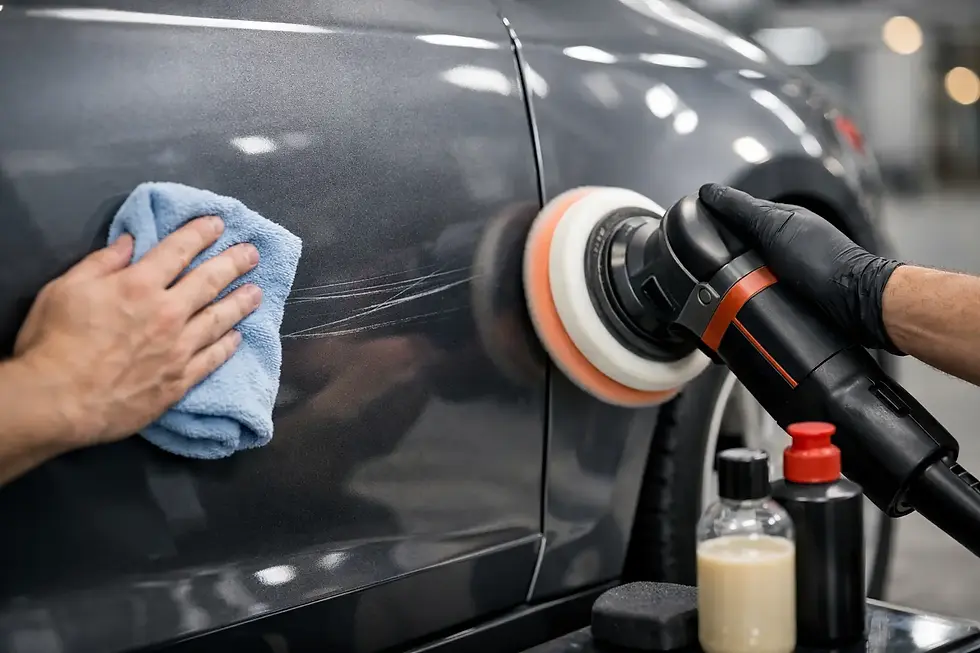
For paint that has already lost depth or carries visible swirl marks, a correction service may be the right starting point. Paint correction carefully refines the clear coat to reduce defects and restore gloss. It should always be followed by a suitable protection plan, otherwise the refreshed finish is exposed to the same harsh conditions again.
Build a maintenance plan that suits your car
There is no single schedule that fits every vehicle. A garaged weekend car in Curepipe has different needs from a daily driver parked near the coast. Your colour, mileage, parking conditions, driving routes and current paint condition should shape the plan.
For many owners, a professional detail followed by ceramic coating and routine safe washes offers excellent long-term value. For vehicles exposed to gravel roads, motorway travel or frequent coastal driving, adding PPF to vulnerable areas gives greater confidence. Regular maintenance detailing then keeps the protective layers performing, rather than allowing dirt and neglect to slowly undo the original investment.
At Younique Detailing Co Ltd, the focus is on matching the protection to the way you actually use your car. Whether it needs paint correction before a coating, targeted PPF or a meticulous maintenance detail, the right approach protects more than shine. It preserves the pride you feel every time you walk back to your car.
Salt air is part of island life, but dull paint and early corrosion do not have to be. Give your vehicle the careful wash routine, protection and professional attention it deserves, and its finish can stay deep, clean and confidently polished through every season.


Comments