
How to Treat Bird Droppings Paintwork Safely
- hello62666
- Aug 19
- 5 min read
A fresh dropping on a clean bonnet can look harmless. Leave it through heat, sun and a few days of driving, however, and it can mark the clear coat beneath it. Knowing how to treat bird droppings paintwork quickly and correctly protects the finish you have worked hard to maintain - whether your vehicle is a daily driver, weekend pride and joy or family SUV.
Bird droppings are not just an appearance issue. They contain acidic compounds and grit from seeds, shells or insects. As the moisture dries, those contaminants can bond to the paint surface. Heat speeds up the process, particularly on dark paint parked outdoors, and a rough wipe can turn a small spot into unnecessary scratching.
Why bird droppings can damage paintwork
Modern automotive paint has a clear coat designed to provide gloss and protection, but it is not invincible. When bird droppings sit on the panel, moisture and heat can soften the top layer of clear coat. As the contamination dries and contracts, it may leave an etched outline behind.
The risk depends on several factors. A vehicle left in direct sunshine will be more vulnerable than one parked under cover. Older paint, unprotected paint and vehicles that already have faded or compromised clear coat can also mark more easily. Ceramic-coated vehicles are easier to clean and have an added sacrificial layer, but coating is not a reason to leave contamination in place.
A stain that remains after washing is not always dirt. It may be an etching mark in the paint itself. This is why prompt, gentle removal is so much better than trying to correct a deeper defect later.
Treat bird droppings paintwork without scratching it
The rule is simple: soften first, then lift away. Never scrape a dried dropping with a fingernail, dry cloth, paper towel or windscreen squeegee. Even when the paint looks clean afterwards, fine scratches can dull the gloss in direct sunlight.
If you notice a fresh dropping while you are out, use a clean microfibre cloth dampened with water or a quality detailer spray. Hold the damp cloth over the affected area for a short time to rehydrate the contamination. Once it has softened, wipe with minimal pressure in one direction, folding the cloth to a clean side as needed.
For dried droppings, a more patient approach is needed. Park the vehicle in a shaded area where the panel is cool to the touch. Saturate the spot with a pH-neutral car wash solution, detailing spray or clean water, then allow it to dwell. The aim is to release the contamination from the surface, not to rub it away.
When it has softened, gently lift the residue with a clean, plush microfibre cloth. Rinse the area and inspect it from several angles. If any residue remains, repeat the soak rather than adding pressure. A second gentle attempt is far safer than one aggressive wipe.
Avoid household cleaners, dishwashing liquid, abrasive sponges and strong solvent-based products. They can strip waxes, degrade protective products or affect delicate trim surrounding the area. The same applies to rubbing compounds used without experience. They may remove a light mark, but they can also create haze or remove more clear coat than necessary.
What to do if a mark is still visible
Once the surface is clean and dry, assess the mark under good light. A faint outline may disappear after a proper wash and a paint-safe finishing product. If it remains visible, run a clean fingertip lightly across the area. If the surface feels smooth but looks dull or stained, the defect may be beneath the surface contamination.
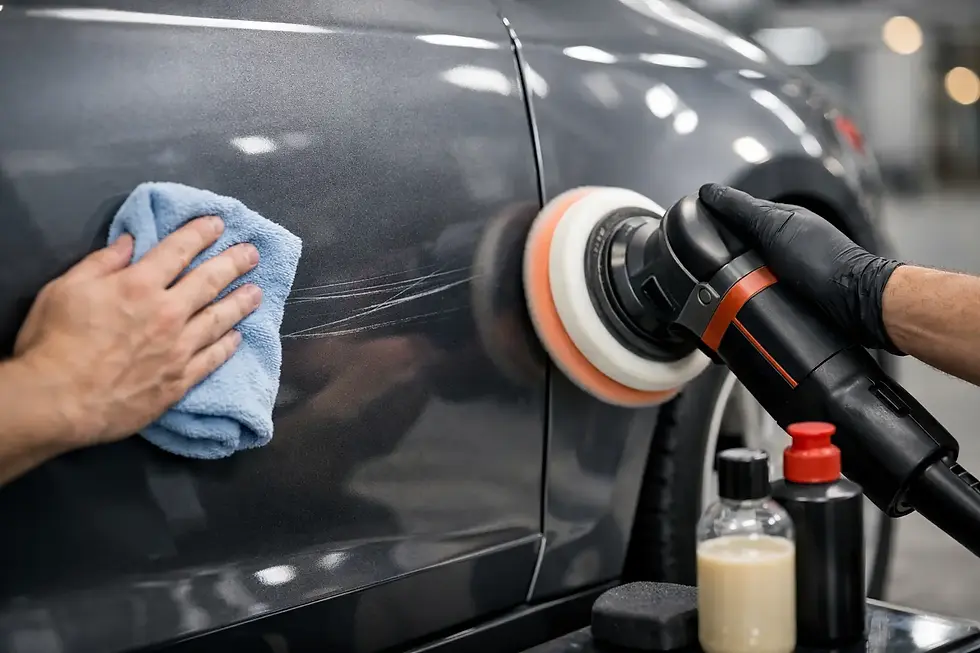
Minor bird-dropping etching can sometimes be improved with careful machine polishing. This gently refines the affected clear coat to restore clarity and gloss. The correct approach depends on the paint thickness, paint condition, severity of the mark and the panel involved. There is always a trade-off with polishing: it improves defects, but it removes a very small amount of clear coat.
For this reason, repeated DIY compounding is not the answer. A professional paint assessment can establish whether the defect is safely correctable and choose the least aggressive method. If the etching is severe, it may be reduced substantially rather than removed completely. Honest expectations matter, especially on paint that has already been polished several times or has signs of previous repair.
A quick response kit worth keeping in the car
A small bird-dropping kit in the boot makes quick removal much easier. Keep a sealed pack of clean microfibre cloths, a gentle detailer spray and a small bottle of clean water. The cloths should be used only on paintwork, not wheels, glass or interior surfaces where grit can transfer.
Do not rely on dry wipes alone. They may be convenient, but they do not provide the lubrication needed to lift contamination safely. If you have nothing suitable with you, it is often better to wait until you can rinse and soften the spot properly than to attack it with a serviette at the servo.
Prevention that makes everyday care easier
You cannot control where birds fly, but you can reduce the chance of permanent damage. Whenever practical, park under cover or use a clean car cover for longer periods. Be mindful of parking beneath trees, power lines and popular roosting spots, particularly when leaving the vehicle for a full workday.
Regular washing is equally valuable. A clean, protected surface gives contaminants less opportunity to bond and makes them easier to remove. Quality waxes, sealants, ceramic coatings and paint protection film each offer different benefits. Wax and sealant provide a cost-effective layer that needs regular renewal. Ceramic coating offers durable chemical resistance, water behaviour and easier maintenance. Paint protection film adds physical protection against stone chips and can be an excellent option for high-impact areas, although it still requires sensible cleaning.
No protective solution makes paintwork maintenance-free. Bird droppings should always be removed as soon as possible, even from ceramic-coated or PPF-protected panels. The advantage is that the protected surface is more likely to release the contamination cleanly and retain its gloss.
When professional detailing is the right call
Book professional help if the mark does not clear after safe cleaning, if multiple panels are affected, or if you can see dull patches, staining or fine scratches around the contamination. This is especially worthwhile for dark-coloured vehicles, prestige paint finishes and cars being prepared for sale, where paint clarity makes a noticeable difference.
At Younique Detailing Co Ltd, paint correction is approached with the same care as protection. The goal is not simply to make a mark less obvious for the day. It is to assess the finish, correct what can be corrected safely and help preserve the depth, gloss and value of your vehicle.
The best response is usually the simplest one: act early, use lubrication, avoid pressure and protect the paint once it is clean. A few careful minutes can save a panel from needing far more involved correction later.


Comments