
Best Paint Protection Mauritius: What Lasts?
- hello62666
- Aug 22
- 5 min read
A dark-coloured car can look freshly detailed in the morning and tired by the afternoon. Under Mauritius sun, coastal air, sudden rain and daily road grime, paintwork faces more than the occasional dusty drive. Fine scratches, fading, water spotting and stone chips slowly take the sharpness out of a vehicle’s finish. Finding the best paint protection Mauritius has to offer is not simply about choosing the most expensive product. It is about matching the protection to how you drive, where you park and the standard you expect every time you walk back to your car.
For some owners, a deep gloss and easier washing are the priority. For others, especially those with newer, premium or enthusiast-owned vehicles, preventing physical damage to the paint is worth the extra investment. The right answer can be ceramic coating, paint protection film, paint correction before protection, or a considered combination of all three.
What damages paintwork in Mauritius?
Paint is exposed every time your car leaves the driveway. Strong UV exposure can dull colour and weaken the appearance of clear coat over time. Rainwater and mineral-heavy water can leave marks when droplets dry on hot panels. Near the coast, salt in the air adds another contaminant that should not be left sitting on the vehicle.
Then there is the damage caused by normal use: grit thrown up from the road, scratches around door handles, scuffs near the boot, bird droppings, tree sap and harsh washing methods. A quick wash with dirty sponges or aggressive chemicals can create swirl marks that become obvious in direct sunlight.
No protection makes a car invincible. Good paint protection reduces exposure, makes contaminants easier to remove and preserves the finish for longer. The key is being clear about which type of damage you want to manage.
Best paint protection in Mauritius: compare your options
Ceramic coating for gloss and easier maintenance
Ceramic coating is a liquid protective coating applied to properly prepared paintwork. Once cured, it forms a durable layer that enhances gloss, improves water beading and makes routine washing more straightforward. Dirt and road film do not bond as easily to a well-maintained coated surface, so the car stays cleaner for longer and is less demanding to wash safely.
It is an excellent option for owners who want a consistently polished look without polishing the car repeatedly. Ceramic coating also provides valuable resistance against UV exposure, light chemical contamination and staining. On a well-cared-for vehicle, the visual difference can be striking: richer colour, clearer reflections and a more refined finish.
There is a common misunderstanding worth clearing up. Ceramic coating does not stop stone chips, deep scratches or dents. It is hardwearing, but it is not a physical shield against impact. It also needs correct preparation and professional application. Applying a coating over swirls, water spots or oxidation can lock those defects beneath a glossy layer rather than improve them.
Paint protection film for high-impact areas
Paint protection film, often called PPF, is the stronger choice where physical damage is the concern. This transparent film is fitted over painted panels to help guard against stone chips, light scuffs, road debris and everyday abrasion. It is particularly valuable on vulnerable areas such as the front bumper, bonnet, front guards, mirrors, door edges and loading area around the boot.
For drivers who regularly travel at speed, use rougher roads, or want to preserve the front end of a newer vehicle, PPF offers protection that ceramic coating cannot. Quality film can also have self-healing properties for fine surface marks when exposed to warmth, helping it retain a cleaner appearance.
The trade-off is cost and coverage. Full-body PPF is a serious investment, while a front-end or high-impact package is often the more practical choice. The quality of the installation matters as much as the film itself. Precise panel preparation, careful edges and clean fitting determine whether the result looks virtually invisible or becomes a distraction.
Paint correction before protection
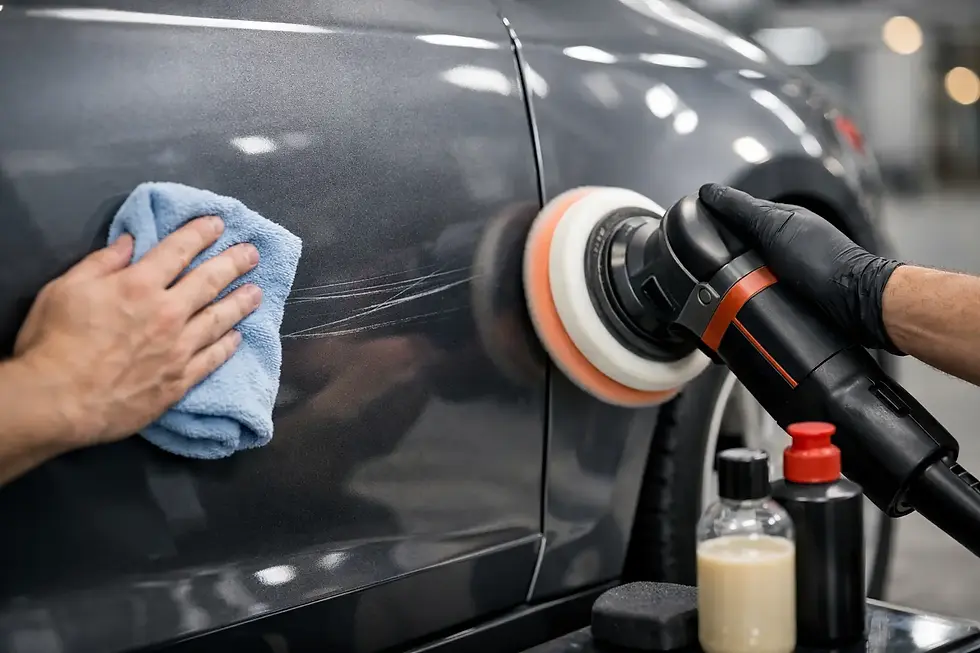
If the finish already has swirls, haze, oxidation or light scratches, paint correction should come before long-term protection. This is a skilled polishing process designed to refine the clear coat and restore depth, clarity and gloss. It can transform paint that looks flat or washed out, particularly on darker colours where imperfections show quickly.
Correction is not about removing as much paint as possible. It is about using measured techniques to safely improve the finish while respecting the condition and thickness of the paint. The level of correction depends on the car. A newer vehicle may need a light enhancement, while an older or poorly washed car may require more extensive work.
Once the paint has been corrected, ceramic coating helps preserve that fresh, crisp result. If chips and impact damage are a concern, PPF can be applied to key panels after preparation. This sequence gives the protection a far better foundation and delivers the kind of finish owners expect from professional detailing.
How to choose the right protection for your car
Start with your vehicle’s use, not just its age. A daily-driven white hatchback parked under cover needs a different approach from a black SUV that spends long hours outside or a weekend car whose owner wants near-showroom presentation.
Ceramic coating is usually the right fit if you want strong gloss, water behaviour and simpler upkeep across the whole vehicle. It suits owners who are prepared to wash their car correctly and want protection that supports a high standard of appearance.
PPF makes sense where impact protection is non-negotiable. New cars, performance vehicles and vehicles that see frequent motorway driving benefit most, particularly when film is fitted to the front and other exposed areas. Pairing PPF on high-risk panels with ceramic coating over the remaining paintwork can deliver a smart balance of defence, appearance and budget.
Paint correction should be part of the conversation whenever the paint has visible defects. Protection performs best on clean, refined paint. Skipping preparation may save money at first, but it rarely produces the finish that makes professional protection worthwhile.
Protection only works with proper maintenance
Even the best coating or film needs considered care. Wash regularly using pH-neutral products and clean wash media. Rinse thoroughly before touching the paint so loose grit is not dragged across the surface. Avoid harsh brushes, strong detergents and rushed wash techniques that can introduce fresh marks.
Bird droppings, tree sap and fuel spills should be removed promptly. Their effect depends on heat, exposure time and the paint’s condition, but leaving them on the panel is never a good test of protection. Drying the vehicle with clean microfibre towels also helps prevent water spots and unnecessary marring.
Periodic professional maintenance is valuable, especially after harsh weather, heavy contamination or a season of frequent travel. A detailer can assess the condition of the coating or film, decontaminate safely and restore the finish without compromising the protection underneath.
Why professional application changes the result
Premium protection is not a bottle of product or a roll of film. It is the preparation, environment, technique and final inspection behind it. Paint needs to be thoroughly cleaned and decontaminated before polishing or coating. Film needs accurate fitting on clean, prepared panels. Rushing either process can leave behind defects, poor adhesion or an uneven finish.
At Younique Detailing Co Ltd in Curepipe, protection work is approached as a tailored service rather than a one-size-fits-all add-on. The goal is to understand the vehicle, correct what needs attention and recommend protection that suits the owner’s expectations. That is how a car gains more than temporary shine - it gains a finish that is easier to enjoy and maintain.
Before booking, ask to have your paintwork assessed in person. A clear look at its condition, your driving habits and your parking situation will point you towards protection that feels worthwhile long after the first glossy handover.


Comments