
Best Protection for Black Cars: PPF or Ceramic?

A black car fresh from a proper detail has a presence few other finishes can match. The paint looks deeper, sharper and almost liquid in the right light. It also reveals everything: fine wash marks, dust, water spots, bird droppings and careless contact with a dirty wash mitt. Finding the best protection for black cars is less about chasing a single miracle product and more about matching the protection to how the car is driven, parked and maintained.
For many owners, the right answer is either ceramic coating, paint protection film (PPF), or a carefully planned combination of both. But neither option can hide neglected paintwork forever. The preparation underneath is what determines whether the finished result looks merely shiny or truly exceptional.
Why black paint needs more considered care
Black paint is not necessarily softer than every other colour, but it makes defects far easier to see. Under direct sun, service-station lighting or the lights in a car park, even light swirls can turn a glossy panel into a web of fine scratches. Dust lands visibly within hours. Mineral-rich water drying on the surface can leave marks that quickly spoil the finish.
That does not make black impractical. It simply means routine washing and protection need to be more deliberate. A quick brush wash, dry wiping a dusty panel, or using old towels can introduce marring that would be barely noticeable on silver or white paint. On black, it is front and centre.
Protection also has limits. Ceramic coating will not stop a trolley strike, and PPF will not make a car immune to poor washing. Both reduce specific risks and make ongoing care easier, but good habits remain part of the result.
Best protection for black cars starts with paint correction
Before applying a coating or film, assess the condition of the paint. A new car can arrive with dealership wash marks, transport contamination or light scratching. A well-used vehicle may have oxidation, etching, deeper swirls and dull patches around handles or on the boot lid.
Paint correction carefully removes or reduces these defects by refining the clear coat with professional machine polishing. On black paint, this stage makes an enormous difference. It restores clarity and reflection, allowing the surface beneath the protection to look crisp rather than hazy.
There is a trade-off. Correction is not about removing every trace of damage at any cost. Clear coat is finite, so the sensible approach is to improve the finish as far as the paint condition and long-term preservation allow. A professional assessment helps set the right expectation, especially on older vehicles or repainted panels.
Applying ceramic coating over swirls does not remove them. In certain lighting, it can make them appear more obvious because the paint becomes glossier. The same principle applies to PPF: quality film can improve the look of a panel, but it is not a substitute for proper preparation.
Ceramic coating for gloss and easier maintenance
A professional ceramic coating forms a durable, chemically resistant layer over prepared paintwork. Its appeal on black cars is immediate: richer gloss, cleaner reflections and water that beads or sheets away more readily. Dirt and road grime are less likely to cling, so regular washing is safer and more efficient.
Ceramic coating is an excellent choice when your priority is preserving a polished appearance and reducing the effort required to maintain it. It offers valuable resistance against UV exposure, road film, bug splatter and many everyday contaminants. It can also be applied to selected exterior surfaces such as wheels, glass and trim where appropriate.
What it does not offer is meaningful impact protection. Fine wash-induced marring can still occur, particularly if the vehicle goes through automatic brushes or is washed with poor technique. Stone chips can still reach the paint. For a black daily driver that spends plenty of time on open roads, that distinction matters.
Coating longevity depends on the product, preparation, storage conditions and maintenance. A car kept outdoors and washed at a harsh automatic wash will not retain the same finish as one cleaned with pH-neutral products and quality microfibre towels. Think of ceramic coating as a high-performance layer that rewards proper care, not a set-and-forget solution.
Ceramic coating suits owners who want
Ceramic coating is usually the strongest fit for drivers who value intense gloss, easier cleaning and broad chemical protection across the whole vehicle. It is also a practical option for owners who want premium results without covering every vulnerable panel in film.
For black cars that are garaged, driven mainly around town and maintained carefully, a corrected and coated finish can stay remarkably refined. Regular, safe washing is the key to keeping that deep, clean appearance intact.
PPF for physical protection where it counts
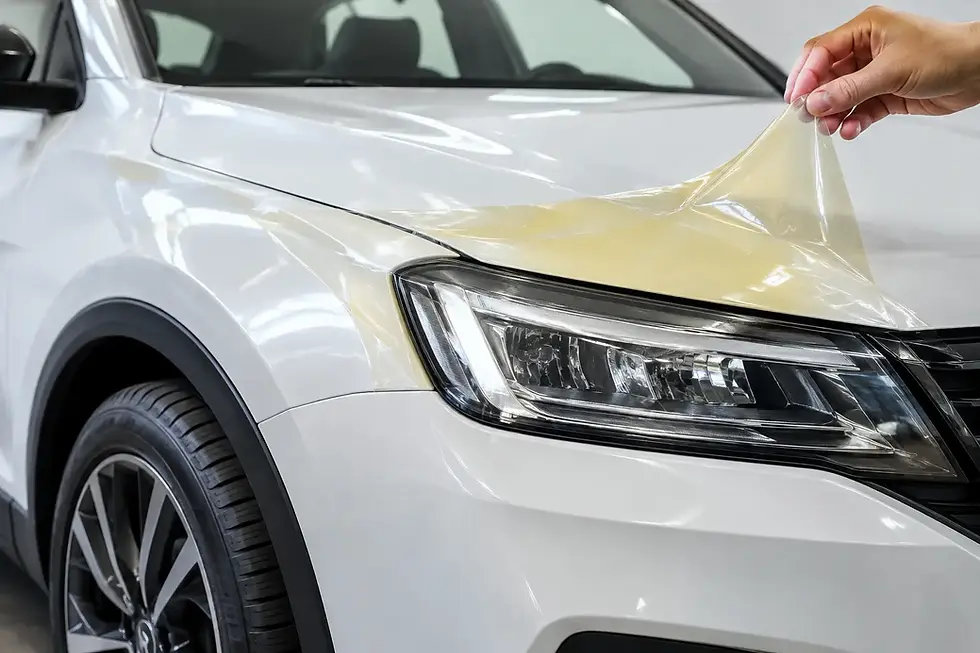
Paint protection film is a clear urethane film applied over painted panels. Its primary purpose is physical defence. Quality PPF can absorb the impact of small stones, reduce scuffing and protect high-risk areas from the marks that build up through normal driving. Many premium films also have self-healing properties, allowing light surface marring to soften with heat.
On a black vehicle, PPF is particularly valuable on the front bumper, bonnet, front guards, side mirrors and lower doors. These areas receive the most punishment from loose gravel, insects, road debris and everyday contact. A full-front installation delivers strong protection without necessarily committing to a full vehicle wrap.
PPF generally costs more than ceramic coating because the material, panel preparation and installation process are intensive. Edges must be positioned carefully, panels need to be clean and decontaminated, and the finish must be inspected closely. On a dark vehicle, precision is non-negotiable. Poorly fitted film can show lifted edges, trapped contamination or uneven lines.
A quality film is not invincible. A hard impact can still damage both film and paint, and damaged sections may need replacement. Film also requires thoughtful maintenance. Avoid abrasive polishing on the surface and use suitable products to preserve clarity and hydrophobic performance.
PPF suits owners who want
PPF is the better choice when stone-chip prevention and physical protection sit at the top of the list. It makes particular sense for new cars, performance vehicles, cars regularly driven on rougher roads, and owners who want to protect the areas that are expensive or difficult to repaint invisibly.
For black paint, the visual benefit is confidence as much as shine. You can enjoy the finish without watching every stretch of loose road surface with concern.
The premium answer: PPF plus ceramic coating
For many black-car owners, the best result is not PPF versus ceramic coating. It is PPF on the highest-impact areas, then ceramic coating across the vehicle, including the film where compatible. This approach protects vulnerable panels against chips while giving the entire exterior a uniform gloss and easier-to-clean surface.
A full-front PPF package paired with a ceramic-coated body is often a smart balance of coverage, appearance and budget. Owners who keep their vehicles for years may choose full-body PPF, particularly on high-value or enthusiast cars. For others, targeted PPF on the bumper, bonnet leading edge, mirrors and door cups is enough, with ceramic protection handling the rest.
The right level comes down to where the car lives and how it is used. A weekend car that sleeps in a garage has different needs from a black daily driver parked outdoors all week. There is no value in paying for coverage that does not suit the vehicle's real-world exposure.
Keep protected black paint looking its best
Even the best protection needs the right wash routine. Wash when the paint is cool, avoid direct sun where possible, and rinse away loose grit before touching the surface. Use a clean wash mitt, separate wheel equipment and soft, freshly laundered microfibre drying towels. Never dry-wipe dust from black paint.
Bird droppings, tree sap and insect residue should be removed promptly. Ceramic coatings buy you time, but contaminants should not be left to bake onto the surface. If water spotting is common in your area, drying the car properly after washing is one of the simplest ways to protect the finish.
Avoid automatic brush washes. Their repeated contact is a common reason black paint loses clarity long before it should. Touchless washes are less risky for swirls, but they may use stronger chemicals, so they are best treated as an occasional convenience rather than the whole maintenance plan.
A black car will always show dust sooner than a lighter colour. That is part of owning one. The goal is not to keep it spotless every minute of the day, but to make sure the surface beneath that dust remains glossy, protected and free from accumulating damage.
At Younique Detailing Co Ltd, a tailored inspection can identify whether your black paint needs correction, ceramic coating, targeted PPF or a combination built around the way you actually drive. Give black paint the care it deserves, and every wash can bring back that showroom-deep shine.


Comments