
Paint Sealants: Protection That Keeps Its Gloss

Fresh paint has a depth and clarity that makes a vehicle look properly cared for. But UV exposure, rain, road film, bird droppings, tree sap and routine washing slowly take the edge off that finish. Paint sealants are designed to put a protective barrier between your clear coat and the conditions your car faces every day, helping it stay glossier, cleaner and easier to maintain.
For drivers who want visible protection without stepping straight into a long-term coating, a quality sealant can be a smart part of a professional detailing plan. The result depends on more than the product, though. Paint condition, preparation, application and aftercare all matter.
What are paint sealants?
A paint sealant is a synthetic paint protection product applied over a vehicle's clear coat. It bonds to the surface and creates a smooth, glossy protective layer that repels water, grime and common contaminants more effectively than unprotected paint.
Most modern sealants are polymer-based, although some formulas also include ceramic-inspired ingredients for added water behaviour and durability. Unlike a traditional carnauba wax, which is valued for its warm appearance but tends to wear away sooner, a sealant is generally built for longer-lasting, practical protection.
The smoother surface makes a noticeable difference in day-to-day ownership. Water beads or sheets away more readily, dust is less likely to cling, and washing becomes less labour-intensive. That does not mean a sealed car cannot get dirty, nor does it make the paint scratch-proof. It simply gives your paintwork a stronger first line of defence and makes proper maintenance more rewarding.
Why paint sealants make sense for everyday cars
A sealant suits many types of vehicles, from a well-used family SUV to a weekend coupe that deserves to look its best. It is particularly useful for cars parked outdoors, driven regularly or exposed to intense sunlight and unpredictable weather.
UV exposure can gradually dull paint and contribute to oxidation, especially on darker colours. Road grime and mineral deposits can also leave marks if they are allowed to sit. A sealant reduces the direct contact between these contaminants and the clear coat, buying you valuable time to wash the vehicle safely.
There is also the visual benefit. A properly applied sealant adds gloss and sharpness to the finish. Metallic flakes can appear cleaner and more defined, while solid colours often gain a slicker, freshly detailed look. On black, navy or dark grey paint, that extra clarity can be especially satisfying - provided the paint has been properly corrected first.
Paint sealant, wax or ceramic coating?
These options are often grouped together, but they are not interchangeable. The right choice comes down to your vehicle's condition, how it is used and how much long-term protection you want.
Paint sealant
A paint sealant offers dependable synthetic protection with strong gloss, water repellency and easier cleaning. It is an excellent option for owners who want more durability than a wax but do not need, or are not ready for, a ceramic coating. Depending on the product, preparation and care routine, it may last several months.
Carnauba wax
Wax can produce a rich, warm glow that many enthusiasts love, particularly on darker paint. Its trade-off is durability. It typically needs more frequent reapplication and provides less sustained protection from the elements than a high-quality sealant.
Ceramic coating
A professionally applied ceramic coating provides a more durable chemical-resistant layer, often lasting years when maintained correctly. It delivers excellent gloss, hydrophobic performance and easier cleaning, but it needs careful paint preparation and represents a larger investment. A coating will not hide scratches, stop stone chips or remove the need for washing.
Paint protection film
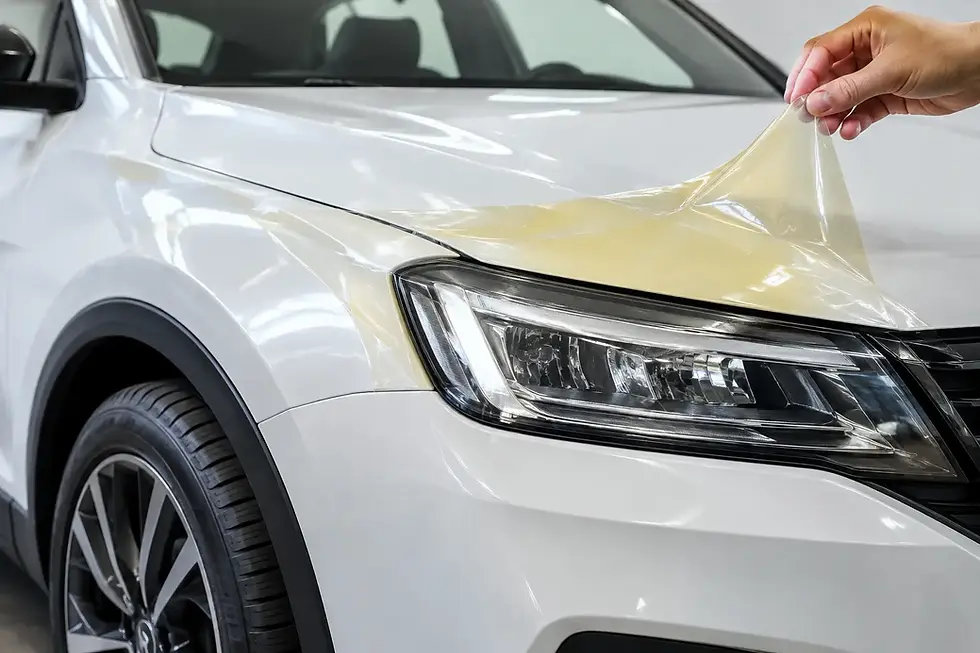
Paint protection film, often called PPF, is the choice for physical impact protection. It is particularly effective on high-risk areas such as the front bumper, bonnet, mirrors and door edges. If stone chips are your main concern, a sealant or ceramic coating alone will not offer the same level of defence as PPF.
For some owners, the best approach is layered protection: PPF on vulnerable areas, a ceramic coating for long-term surface protection, and considered maintenance to preserve the finish.
Preparation determines the finish
Applying a sealant to unprepared paint is like polishing a dirty window. The product may add temporary shine, but it will not deliver its full performance or visual potential.
A professional process begins with a safe wash to remove loose dirt and road film. The paint may then need chemical decontamination to dissolve iron fallout and tar, followed by clay treatment where appropriate. These steps remove bonded contamination that can make paint feel rough and interfere with bonding.
Paint correction is the next consideration. Sealants enhance the surface beneath them, including its flaws. If there are swirl marks, light scratches, haze or oxidation, correcting those defects before protection can transform the final result. A sealant cannot fill deep scratches or repair damaged clear coat, but it can preserve a finish that has been carefully refined.
Once the surface is clean, smooth and dry, the sealant is applied in a controlled, even layer and allowed to cure as required by the product. Rushing this stage can lead to uneven protection, streaking or reduced durability.
How long do paint sealants last?
There is no single answer because durability is shaped by real-world conditions. A vehicle that lives outside in strong sun, gets washed at an automatic car wash or travels long distances through rain and road spray will wear through protection faster than a garaged weekend car washed carefully by hand.
As a practical guide, a professionally applied paint sealant can often provide protection for around three to six months. Some advanced formulas may perform longer, while quick spray sealants are intended for shorter-term maintenance. The water behaviour is one useful sign, but it is not the only one. A car can still bead water unevenly when protection is declining, so a professional inspection is the best way to judge whether it is time to reapply.
Keeping sealed paint looking its best
Good aftercare extends the life of your protection and reduces unnecessary wear on the clear coat. Avoid washing a hot vehicle in direct sun where possible, as soap and water can dry too quickly and leave spots. Use pH-neutral car shampoo, clean wash mitts and soft drying towels rather than household detergents or rough sponges.
Automatic brush washes are convenient, but they can introduce fine scratches and swirl marks over time. If you use one regularly, no sealant can fully prevent that mechanical contact from affecting the finish. Touchless washing is usually gentler, although strong chemicals should still be used carefully.
Bird droppings, bug splatter and tree sap should be removed promptly. Protection helps reduce their grip, but acidic or sticky contamination can still etch or mark paint if left in place. Keeping a quality quick-detail product and clean microfibre cloth in the boot can make small clean-ups easier when you are away from home.
When a sealant is the right professional service
Paint sealants are ideal when the goal is practical, seasonal protection and a clean gloss without the commitment of a coating. They also work well as part of regular maintenance detailing for owners who want their car consistently presented at a high standard.
At Younique Detailing Co Ltd, the focus is not simply on applying a product and sending the vehicle on its way. The paint is assessed first, because a newer car with light wash marring needs a different approach from an older vehicle with oxidation, embedded fallout or neglected clear coat. Tailored preparation ensures the protection looks as good as it performs.
If your paint feels rough, looks flat after washing or no longer sheds water the way it once did, it may be time to refresh its protection. A properly prepared and sealed finish makes every wash easier, every drive more satisfying and every glance back at your parked car worth it.


Comments