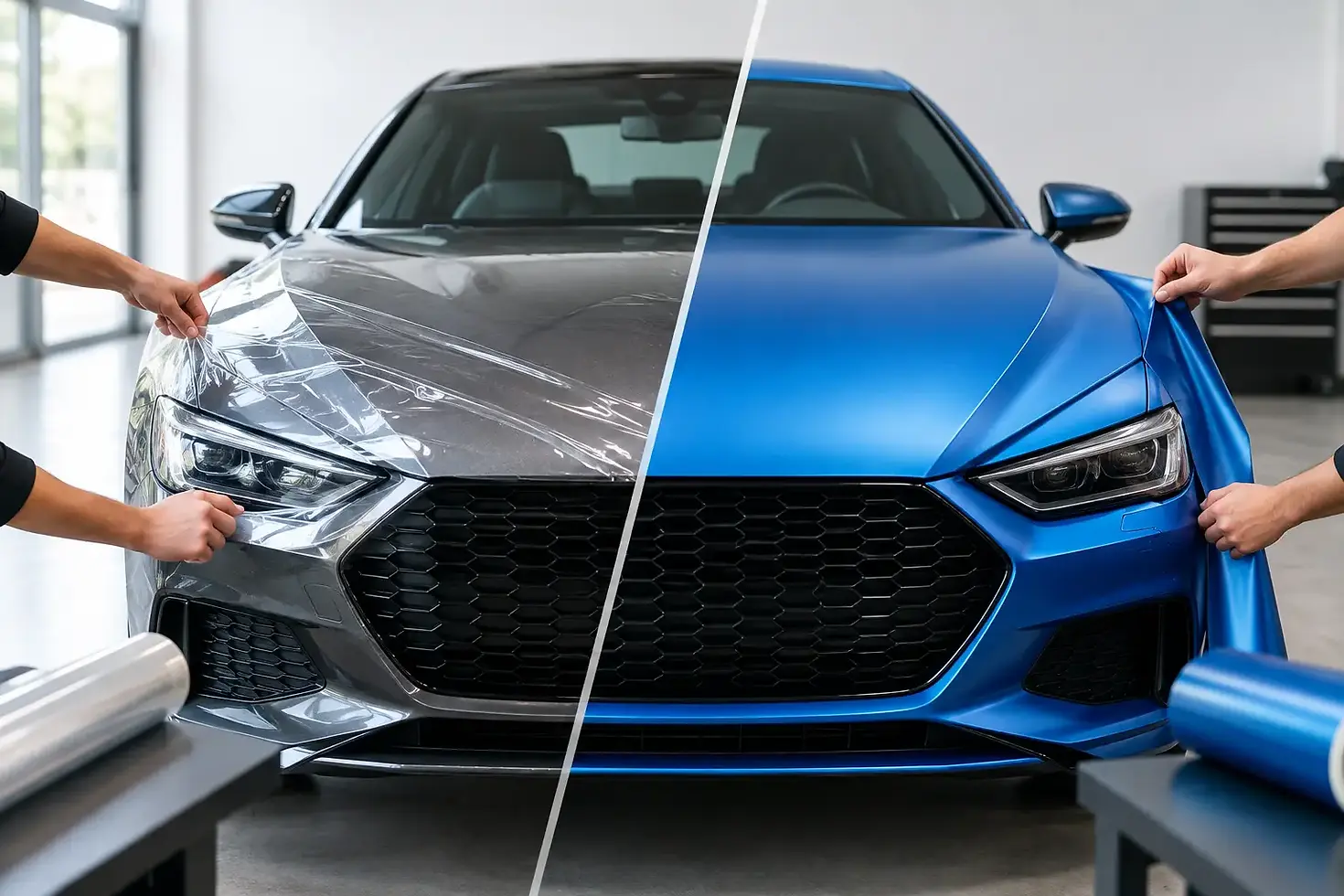
PPF versus vinyl wrapping: Which suits your car?
A fresh wrap can completely change the way your car looks. A quality paint protection film can help it keep that look when daily driving brings stone chips, scratches and harsh weather. That is the real question behind PPF versus vinyl wrapping: are you chasing a new appearance, serious paint protection, or a carefully considered balance of both?
For owners who take pride in every panel, the right choice comes down to how you use the vehicle, how long you plan to keep it and what matters most every time you walk back to it in the car park.
What is paint protection film?
Paint protection film, commonly called PPF, is a clear polyurethane film applied over painted surfaces. Its purpose is protection first. A professionally installed film creates a sacrificial barrier between your factory paint and the hazards that cause damage over time.
Quality PPF is substantially thicker than vinyl wrap and is designed to absorb the impact of small road debris. It is particularly effective on high-impact areas such as the front bumper, bonnet, front guards, side mirrors, headlights, sill panels and the area behind the wheels. For vehicles regularly travelling on motorways, rougher roads or gravel driveways, these are the panels that often tell the story of daily use.
Many modern PPF products also feature self-healing top coats. With warmth from the sun or warm water, fine surface marks can soften and disappear. This does not mean the film is indestructible. A hard scrape, deep gouge or major impact can still damage it. The advantage is that the film takes the hit rather than the original paintwork underneath.
PPF is available in gloss, satin and matte finishes. Clear gloss PPF is the usual choice for owners who want to preserve the factory colour and depth of their paint. Satin or matte film can alter the finish while still delivering a high level of protection.
What is vinyl wrapping?
Vinyl wrapping is primarily an appearance service. A coloured or textured vinyl film is fitted over the exterior panels to change the vehicle’s finish without repainting it. It can take a standard white car to satin black, add a bold metallic colour, create a colour-shifting finish or provide subtle accents on a roof, mirrors or interior trim.
Vinyl is thinner than PPF and is not engineered to provide the same impact resistance. It can offer a degree of protection from light wash marks, UV exposure and minor scuffs, but it should not be treated as a substitute for PPF on vulnerable panels.
That does not make vinyl the lesser option. It simply has a different job. If you enjoy changing the personality of your car, want a distinctive finish for your business vehicle, or prefer not to commit to a permanent respray, vinyl wrap offers a level of creative freedom that clear PPF does not.
A great wrap installation depends on preparation, panel-by-panel precision and clean finishing around edges, badges, handles and trims. Poorly installed vinyl can lift, trap contamination or show untidy cuts. The difference is visible up close, which is why skilled workmanship matters as much as the film itself.
PPF versus vinyl wrapping: the key differences
The clearest distinction is simple: PPF protects the paint, while vinyl changes the look. Both sit on top of the paintwork, but they are made for different priorities.
PPF is thicker, clearer and more impact resistant. It is the better choice for defending valuable factory paint against stone chips, road rash and everyday wear. It also suits drivers who love their car’s existing colour and want it to remain showroom-fresh for as long as possible.
Vinyl is the stronger choice when colour, texture and customisation are the goal. It gives you options that paint protection film generally cannot match, from gloss and matte colours to carbon-fibre style finishes and bespoke design work. It costs less than a full PPF installation in many cases, although final pricing depends on vehicle size, film choice, coverage and preparation required.
Lifespan is another consideration. High-quality PPF can provide long-term protection when cared for properly, often outlasting vinyl wrap. Vinyl can still look excellent for years, but its longevity is more affected by sun exposure, cleaning habits, storage and the quality of the material. A car parked outside every day will place greater demands on any film than one kept under cover.
When PPF is the smarter investment
PPF makes the most sense when preserving original paint is your priority. This is especially true for new cars, premium vehicles, performance cars and well-kept daily drivers where every chip on the front end feels frustrating.
You do not always need to cover the entire car. Front-end PPF is a popular practical option because it targets the areas exposed to the most damage. A partial front package may include the bumper, leading section of the bonnet and front guards, while a full front package extends coverage for a more uniform result. Full-body PPF is suited to owners seeking maximum long-term defence across every painted panel.
Consider PPF if your vehicle is exposed to frequent highway travel, loose road surfaces, tight parking spaces or regular long-distance driving. It is also worth considering before damage occurs. Paint correction can improve existing swirls and light defects, but it cannot restore paint that has been chipped away.
For resale-conscious owners, original paint in excellent condition can be a genuine advantage. PPF is removable when professionally installed and removed correctly, revealing the protected surface beneath. The condition of the paint before installation still matters, which is why any correction or preparation should be discussed before the film goes on.
When vinyl wrapping is the better fit
Choose vinyl when you want your car to make a visual statement. It is ideal for drivers who love variety, want to refresh an ageing factory colour or want a finish that feels more personal than what came from the showroom.
A full colour change can be dramatic, but smaller details can be equally effective. A gloss black roof, satin mirror caps, de-chromed trim or carefully selected accent pieces can sharpen the overall look without changing the entire vehicle. The best choice is one that suits the lines of the car rather than following a trend that may date quickly.
Vinyl is also useful where reversibility matters. You may lease a vehicle, plan to sell it in a few years or simply enjoy refreshing its style. Provided the original paint is in sound condition, a quality wrap can be removed later without the permanence of a respray.
However, vinyl cannot hide every flaw. Deep scratches, peeling clear coat, rust, dents and poorly repaired panels may remain visible through the film or compromise adhesion. The surface must be properly cleaned, decontaminated and assessed before installation. A wrap is not a shortcut around poor paint condition.
Can you use PPF and vinyl together?
Yes, and for many owners this is the most considered solution. Coloured vinyl can be applied to create the desired look, with PPF placed over high-impact areas where additional protection is needed. Some premium coloured PPF products can also provide a colour change and serious protection in one film.
The right approach depends on the finish you want, the areas exposed to damage and your budget. A weekend cruiser may suit a full vinyl wrap with PPF on the bumper, mirrors and sill panels. A performance car driven regularly may benefit more from full-front or full-body PPF, with styling changes kept to selected details.
Do not assume a ceramic coating replaces either option. Ceramic coating improves gloss, water behaviour and cleaning ease, but it is not designed to stop stone chips. It can be applied over suitable PPF or vinyl to make maintenance easier, but the product and application process need to be compatible with the film.
Cost, care and the value of professional preparation
PPF usually costs more than vinyl because the material is thicker, the installation is more demanding and the protection level is significantly higher. Full-body PPF is a premium investment. Vinyl prices vary widely according to coverage, film type, vehicle shape, dismantling requirements and the amount of finish work involved.
The cheapest quote is rarely the best value when your paintwork is involved. Proper preparation is essential. The car should be thoroughly washed, chemically decontaminated and inspected under good lighting. Existing swirls, staining and defects may need correction before either film is installed, particularly if you want a crisp, refined finish rather than simply covering the panel.
Once protected or wrapped, wash with pH-neutral products, avoid abrasive brushes and remove bird droppings, tree sap and fuel spills promptly. Careful washing helps preserve the film’s gloss, edges and clarity. If you are unsure about a product or technique, ask your installer before using it.
At Younique Detailing Co Ltd, the best recommendation starts with an honest look at your paint, your driving routine and the result you want from your vehicle. Whether you choose a colour transformation, focused stone-chip defence or both, the right film should make ownership more enjoyable every time you see your car shining in the driveway.


Comments